Taxonomy
Taxonomy Taxonomy is the field of biology that names organisms and places them in the tree of life. It is one of the oldest branches of biology, and it has contributed in an invaluable way to its modern form. It is not a surprise, so, that most of the greatest evolutionary biologists of all times, including Darwin and Wallace himself, were taxonomists, and that this discipline allowed them to formulate the evolutionary theory which we know today. Studying how species differ from one another and how we can classify them is stimulating and constitutes a fertile ground for more complex scientific questions.
Integrative taxonomy
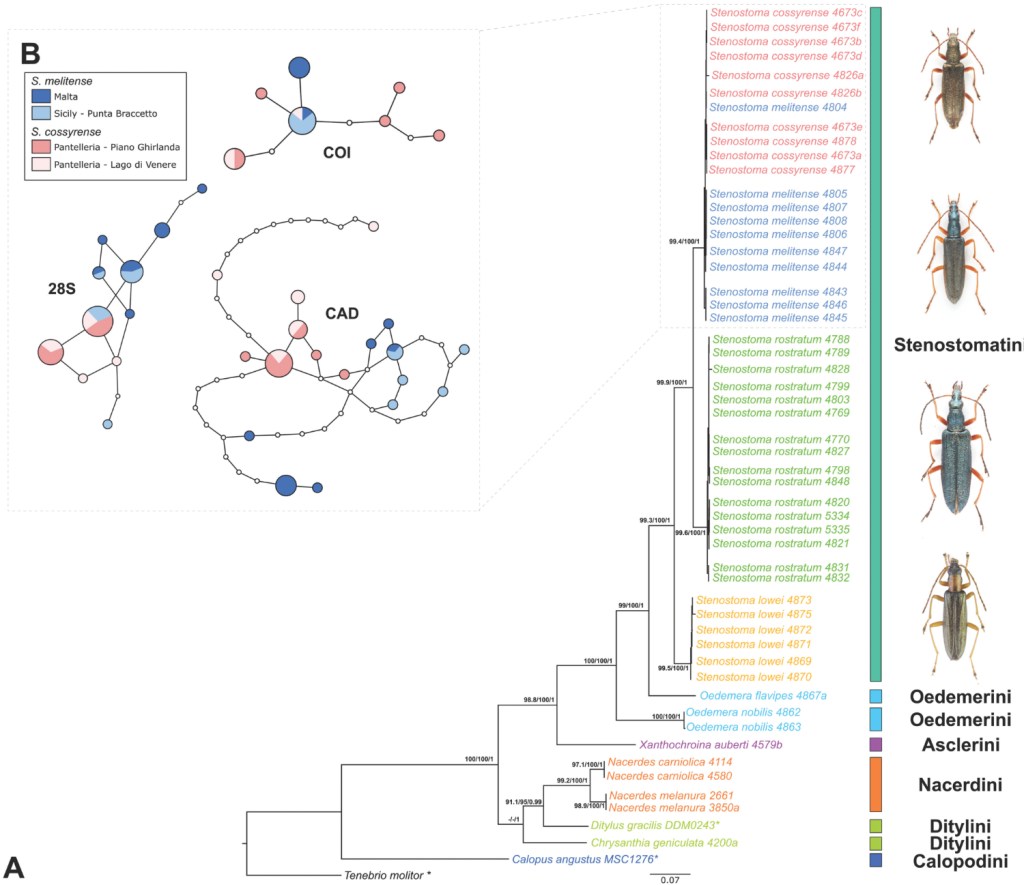
My goal in taxonomic research is to use an integrative approach for studying the complex relations between species. This implies using morphology, molecular data, ecological information and field work for characterising a species in the most complete way possible. In this article from 2023, a collaborative work with Alessandra Riccieri and Marco Bologna, we studied an interesting group of Oedemeridae distributed in the Mediterrenean and Atlantic islands, showing that the speciation history involved both ancient geological events and recent ones, with two species still showing incomplete lineage sorting indicating an ongoing speciation. This approach to study speciation was chiefly integrative, involving morphological and molecular analysis to dissect the taxonomy of the genus, as well as a throughout examination of collection material to assess the distribution of the taxa studied and ecological work on the field to characterise their life history.
The original article can be found at: https://academic.oup.com/zoolinnean/article-abstract/200/3/705/7246614?redirectedFrom=fulltext&login=false
Collection-based research
Sometimes an integrative approach is not feasible, either because the group is not well characterised yet from a basic taxonomy point of view, or because the specimens are not easily accessible, like in this case of this species-rich tropical genus of Oedemeridae. During the past 3 years I had the chance of studying the material collected by the Naturischermuseum in Basel, the National Museum in Prague, the British Museum of Natural History and the Erfurt Museum in Laos and adjacent countries, and could find 4 new species to science. Those specimens are, most times, the result of a unique expedition in remote habitats, which are difficult to replicate. In these cases, having to deal with a poorly known group and with material from museums, we first try to characterise the alfa-taxonomy of the species and describing their distribution.


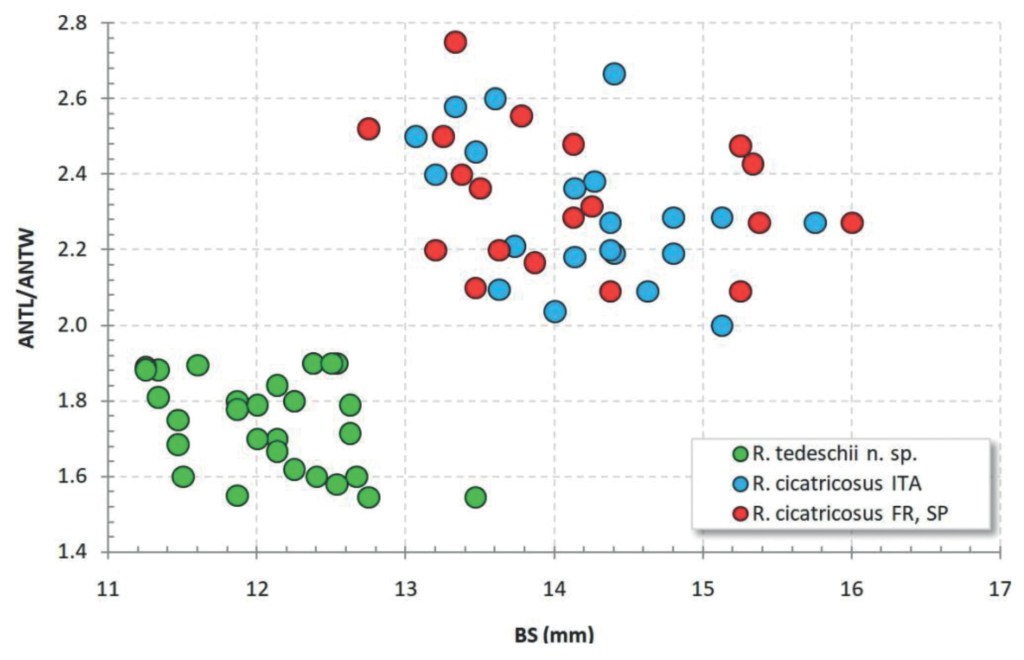
When the differences between species are not strong enough and when several specimens are available, it is possible to use morphometry to characterise the distances between the species and describe new species, like in the aforementioned paper.
Field work
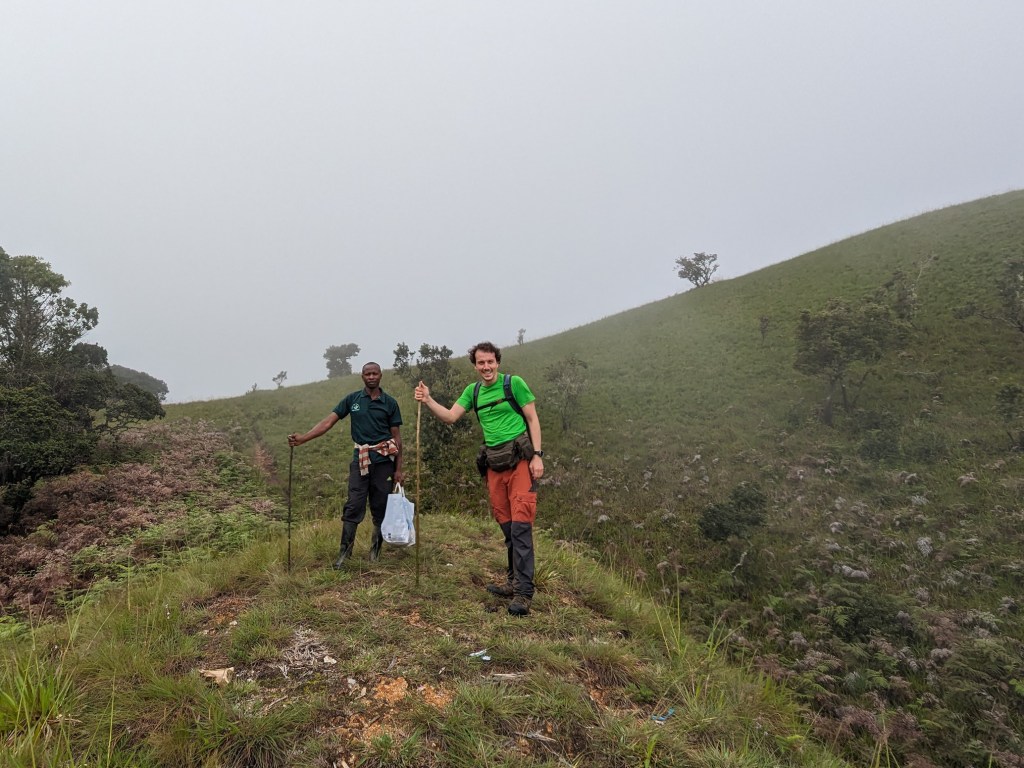
For many parts of my research field work represents an essential step to collect samples, data and a great source of fun! In the past I did field work in many countries of the World included Italy, Greece, Morocco, Costa-Rica, Tanzania and France.
Samples needed!
For my ongoing projects on the taxonomy of false blister beetles and longhorn beetles, I am actively looking for speciemens in 96° ethanol or snap froze, for DNA sequencing. If you wish to contribute, take a look at this page!
 Riccardo Poloni | insect evolution and ecology